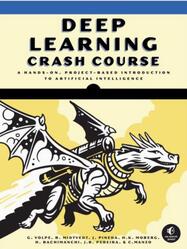
We believe that the best way to learn deep learning is by coding. For this reason, this book is organized around self-contained examples and projects that progress from simple to complex. As a result, you’ll receive all the benefits of sequential learning while also having the freedom to explore each topic independently.
As you embark on this journey, it’s important to recognize that deep learning frameworks continuously evolve, but their core principles remain consistent. This book primarily uses PyTorch, currently the most popular deep learning framework, along with Lightning and Deeplay for added convenience. However, the fundamental concepts, techniques, and insights you will gain are transferable across various frameworks. In an ever-evolving landscape, they will empower you to choose the best tools for your projects as well as transition between them, easing your learning curve when the next deep learning framework emerges.
Mini-Batches and Optimizer.
Batch size and training length are the next hyperparameters you can play with to see how they affect performance. Using a batch size larger than l allows the neural network to calculate the gradients from the average of many samples at once. This, in turn, achieves two results. First, it improves the computational efficiency of the training, allowing you to train on more data in the same amount of time. Second, it stabilizes the training by better approximating the optimal direction to update each weight in each training step.
However, this isn’t to say that a larger batch size is always better. For example, the increased stochasticity from smaller batch sizes can help the neural network escape local minima in the optimization landscape.
Contents.
Acknowledgments.
Introduction.
Chapter 1: Building and Training Your First Neural Network.
Chapter 2: Capturing Trends and Recognizing Patterns with Dense Neural Networks.
Chapter 3: Processing Images with Convolutional Neural Networks.
Chapter 4: Enhancing, Generating, and Analyzing Data with Autoencoders.
Chapter 5: Segmenting and Analyzing Images with U-Nets.
Chapter 6: Training Neural Networks with Self-Supervised Learning.
Chapter 7: Processing Time Series and Language with Recurrent Neural Networks.
Chapter 8: Processing Language and Classifying Images with Attention and Transformers.
Chapter 9: Creating and Transforming Images with Generative Adversarial Networks.
Chapter 10: Implementing Generative AI with Diffusion Models.
Chapter 11: Modeling Molecules and Complex Systems with Graph Neural Networks.
Chapter 12: Continuously Improving Performance with Active Learning.
Chapter 13: Mastering Decision-Making with Deep Reinforcement Learning.
Chapter 14: Predicting Chaos with Reservoir Computing.
Conclusion.
Index.
Бесплатно скачать электронную книгу в удобном формате, смотреть и читать:
Скачать книгу Deep Learning Crash Course, Volpe G., Midtvedt B., Pineda J., 2026 - fileskachat.com, быстрое и бесплатное скачивание.
Скачать epub
Ниже можно купить эту книгу, если она есть в продаже, и похожие книги по лучшей цене со скидкой с доставкой по всей России.Купить книги
Скачать - epub - Яндекс.Диск.
Дата публикации:
Хештеги: #учебник по информатике :: #информатика :: #компьютеры :: #Volpe :: #Midtvedt :: #Pineda
Смотрите также учебники, книги и учебные материалы:


Следующие учебники и книги:



Предыдущие статьи: